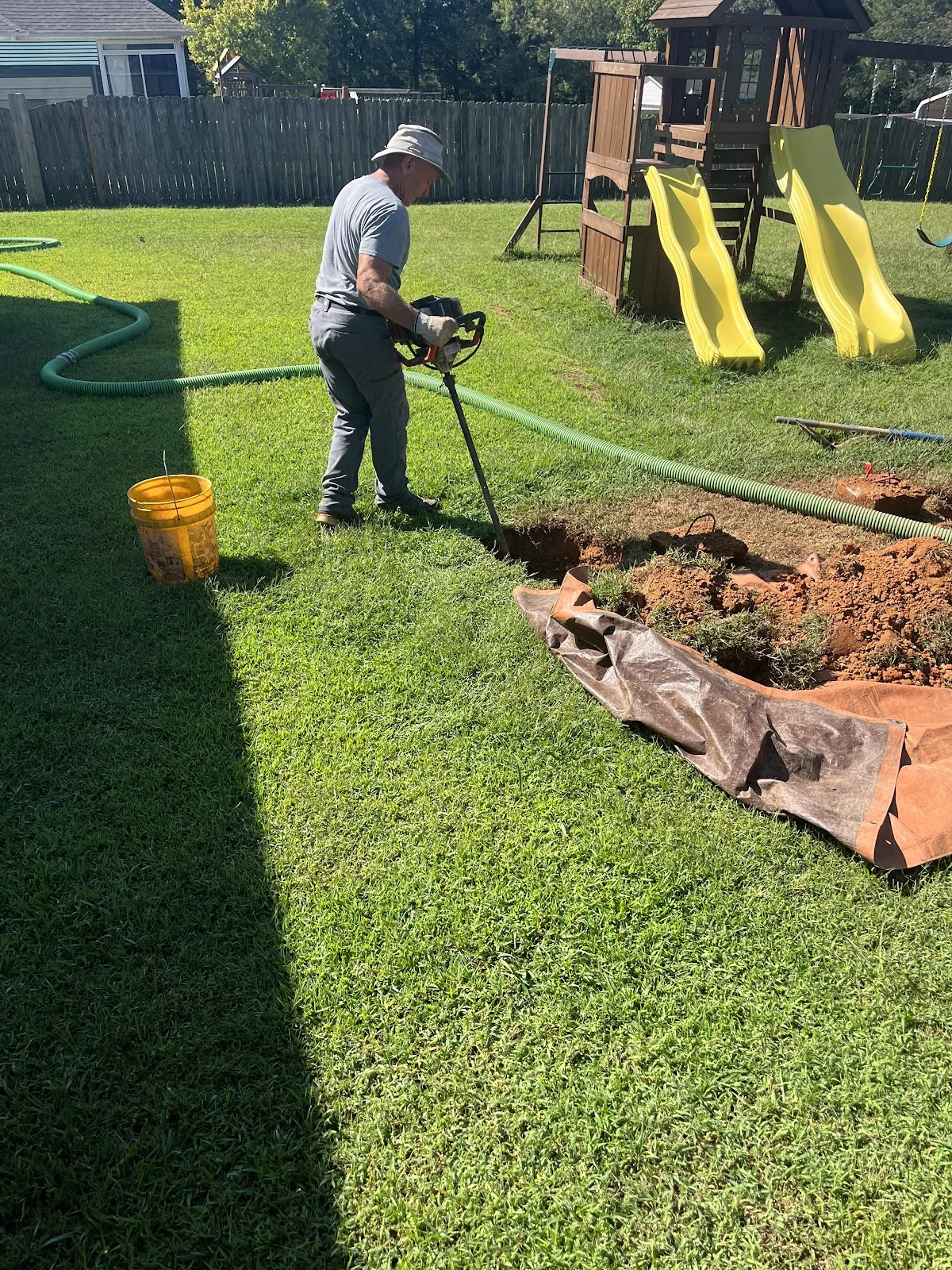
Septic tank pumping removes the sludge and scum that build up in your tank so waste keeps flowing to the drain field instead of backing up. Most homes need it every three to five years. Call Aardvark at (256) 604-9681 and Mark will give you a fixed price on the phone before we ever come out.
Every few years the solids in your septic tank have to come out. If they do not, they push into the drain field, and a clogged drain field is the expensive repair you never want. Pumping on schedule is the cheap insurance that keeps the whole system working.
Aardvark Septic Services pumps tanks for homes and small businesses across Athens, Limestone County, and the surrounding North Alabama roads. Call and you talk to a real person. Mark quotes a fixed price over the phone, tells you when we can be there, and shows up on time.
How often should you pump a septic tank?
A typical 1,000 to 1,500 gallon tank on a normal household needs pumping about every three to five years. If you have a garbage disposal, a full house, or a smaller tank, the sludge builds faster and you may need it sooner.
The honest answer is that usage matters more than the calendar. A retired couple can go longer than a family of six. When we pump your tank we can look at how much solid was in it and tell you a realistic interval for your house, so you are not guessing.
| Household | Tank size | Typical interval |
|---|---|---|
| 1 to 2 people | 1,000 gal | Every 4 to 5 years |
| 3 to 4 people | 1,000 to 1,250 gal | Every 3 to 4 years |
| 5 to 6 people | 1,250 to 1,500 gal | Every 2 to 3 years |
| Home with garbage disposal | Any | Sooner, disposal adds solids |
| Rental or heavy use | Any | Have it checked yearly |
What are the warning signs your tank is full?
Slow drains all over the house, toilets that gurgle, or a soggy, bright-green patch of grass over the drain field are all telling you the tank is near capacity. A smell in the yard or a backup at the lowest fixture, often a basement or a first-floor tub, is the tank warning you it is out of room.
If you are seeing any of that, do not wait for a full backup. Call (256) 604-9681 and we can usually get you on the schedule quickly before it turns into a mess inside the house.
What actually happens during a pump-out
We locate and uncover the tank lid, open it, and pump out both the floating scum layer and the settled sludge at the bottom. A tank is not empty until both layers are gone, and pumping only the liquid off the top is a shortcut that leaves the real problem behind.
While the tank is open we look at the baffles, the effluent filter, and the liquid level, which tells us whether water is draining out the way it should. If we spot something starting to go wrong, we tell you then, plainly, so nothing sneaks up on you.
Signs it is time to pump
- Slow drains in more than one fixture
- Toilets gurgle when they flush
- Odor in the yard near the tank or field
- Wet ground or extra-green grass over the drain field
- A backup at the lowest drain in the house
- It has been more than five years since the last pump
Why pumping is cheaper than replacing a drain field
When solids are allowed to carry over into the drain field, they clog the soil and the field stops absorbing water. Replacing a drain field is one of the biggest bills a septic owner can face. Regular pumping keeps solids in the tank where they belong.
North Alabama clay soils already drain slowly, so a field here does not forgive abuse. A few hundred dollars of pumping on a sensible schedule protects a system worth many times that. It is the clearest example of small maintenance beating a big repair.
Getting a fixed price before we come out
You should know what you are paying before a truck pulls in your driveway. Call Aardvark and Mark will give you a straight, fixed price on the phone. One local customer told us our phone quote came in over 400 dollars under another estimate.
No surprise add-ons, no talking you into work you do not need. If the tank is hard to find or buried deep we will tell you what that means for the job before we start, not after.