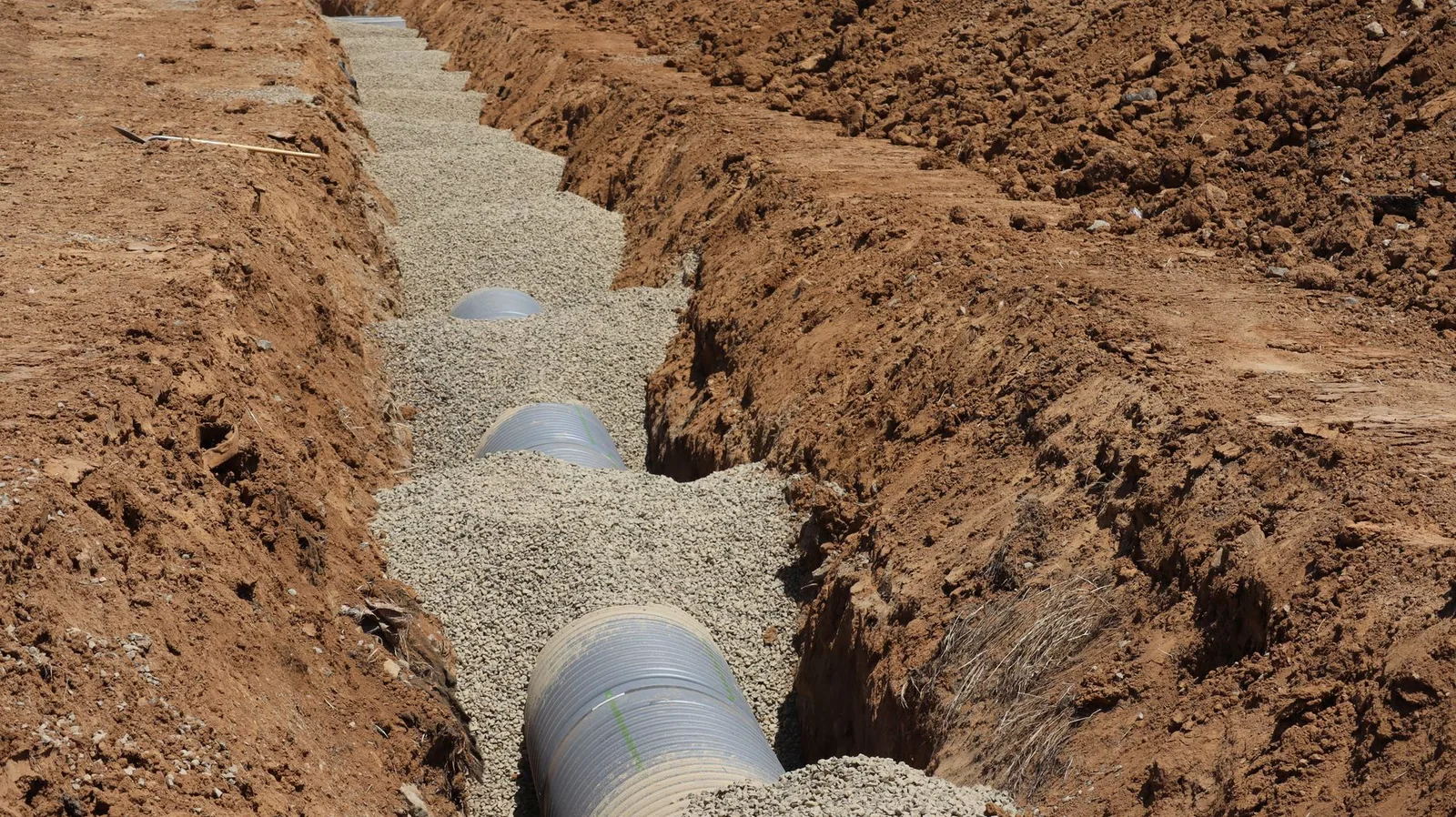
New construction septic is the system put in when a home is built where there is no public sewer. It starts with a soil evaluation and permit and is sized to the house. Aardvark installs them around Limestone County. Call (256) 604-9681 early in your build.
Building in the county often means there is no public sewer, so the home needs its own septic system. Getting it right is part of the build, and it starts earlier than most people expect, with the soil and the permit.
Aardvark installs septic systems for new construction around Athens and Limestone County. Call (256) 604-9681 early in your project and we will help you plan the system your lot and your home actually need.
Start with the soil, before the slab
The soil decides a lot about a septic system, so the evaluation should happen early. A soil or perc evaluation tells you what the ground can absorb and where a drain field can go, and the permit follows from it.
Sorting this out before the house is set avoids expensive surprises. You do not want to finish framing and then learn the field has to go where the driveway is planned.
| Step | What happens |
|---|---|
| Soil evaluation | Ground tested for what it can absorb |
| Permit | Issued based on the soil and the home |
| System design | Tank and field sized to the house |
| Installation | Tank set, line run, field built to spec |
| Risers to grade | Access brought up for easy future service |
Sizing the system to the house
The system is sized to the home, mainly the number of bedrooms and the expected water use. A bigger house needs a bigger tank and a larger drain field. Planning for the finished home, not just the current phase, keeps you from outgrowing it.
If you expect to add on later, tell us. It is easier to size with that in mind now than to rebuild the system down the road.
Permits and county requirements
New construction septic in Alabama follows county health department and state rules, with a permit based on the soil evaluation. We keep the installation in line with those requirements from the start.
Doing it by the book protects your certificate of occupancy, your investment, and the next owner. We will explain the steps in plain terms so the process does not feel like a black box.
Plan your new construction septic
- Get the soil evaluation early
- Size the system for the finished home
- Confirm where the drain field can go before siting the house
- Follow county health department permitting
- Add risers to grade during install
- Coordinate timing with your builder
Coordinate with your build
A septic install has to fit the rhythm of a construction project, and timing matters. Call us early so we can plan around your schedule and the other trades rather than getting squeezed in at the end.
Call (256) 604-9681 while you are still planning. Mark will talk you through the process and give you a straight price once we understand the home and the lot.
Protecting the system through the rest of the build
Once a septic system goes in, the rest of the construction has to respect it. Heavy trucks and equipment driving over a fresh drain field can compact the soil and ruin its ability to absorb, undoing the whole point of the field before the house is even finished.
We will show you where the tank and field are and what to keep off them, so the other trades do not damage the system during the build. A little coordination protects an investment you only want to make once. Call (256) 604-9681 and we will help keep it safe through move-in.
The earlier you bring us in, the smoother it goes, because the soil evaluation and the drain field location can shape where the house and driveway sit. Call while you are still planning and we will keep the septic in step with the rest of the build, follow county permitting, and give you a straight timeline and price. We will also show you where the tank and field sit and what to keep off them, so the other trades on the job do not damage a fresh system before you have even moved in.