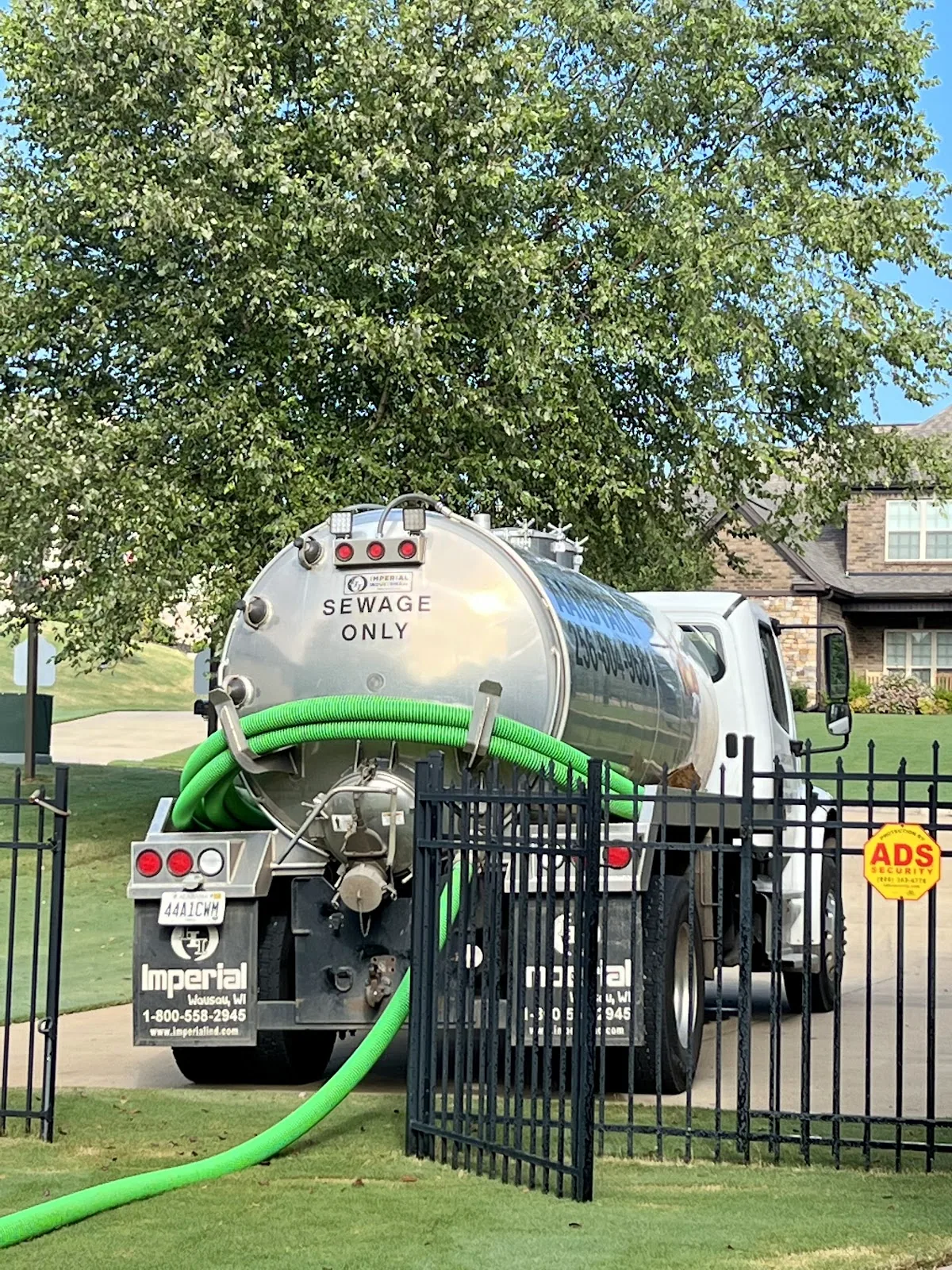
Drain field services address the part of your septic system that returns treated water to the soil. Soggy ground, odor, and slow drains point to a struggling field. Catching it early beats a full replacement, which is the expensive failure. Call Aardvark at (256) 604-9681 at the first warning sign.
The drain field is where treated water from the tank soaks back into the ground. It is the most expensive part of a septic system to replace, and North Alabama clay soils, which drain slowly, are hard on it.
Aardvark works with drain fields around Athens and Limestone County. Call (256) 604-9681 if you see the warning signs, because catching a struggling field early gives you far more and cheaper options.
How a drain field works
Liquid leaves the tank and flows into a network of pipes buried in gravel trenches. The water seeps out and the soil filters and absorbs it. As long as solids stay in the tank, the field can do this job for many years.
The trouble starts when solids reach the field and clog the soil, or when the soil is overloaded with more water than it can absorb. Then the field stops accepting water and backs the whole system up.
| Sign | What it suggests |
|---|---|
| Soggy ground over the field | Field not absorbing water |
| Sewage odor outside | Effluent surfacing |
| Greener, taller grass over trenches | Extra moisture and nutrients |
| Backups soon after pumping | Field, not just the tank |
| Slow drains and gurgles | Water backing up from the field |
Signs a field is struggling
Soggy or spongy ground over the field, a sewage smell outside, grass that is suddenly greener and taller over the trenches, and slow drains inside are the signals. A backup that returns soon after pumping can point at the field too.
These signs mean the field is not absorbing the way it should. Caught early, there may be options. Ignored, a field can fail completely, and that is the replacement you want to avoid.
Why clay soil makes it worse
Clay drains slowly by nature, so a North Alabama field has less margin to begin with. Add solids from a neglected tank or too much water at once and the soil clogs faster than it would in sandy ground.
That is why regular pumping matters so much here. Keeping solids in the tank is the single best thing you can do to make a drain field last in this soil.
Protect your drain field
- Pump the tank on schedule to keep solids out
- Keep an effluent filter clean
- Fix running toilets and leaks that overload the field
- Keep vehicles and heavy loads off the field
- Divert downspouts and surface water away from it
- Call at the first sign of soggy ground or odor
Prevention beats replacement
A drain field replacement is the big bill in the septic world. Almost everything else, pumping, filter cleaning, baffle repair, exists partly to keep the field alive and put that bill off for as long as possible.
Call (256) 604-9681 at the first sign of trouble. We will assess the field, tell you honestly where it stands, and lay out your options in plain terms.
Habits that add years to a field
How you live with a septic system shows up in the drain field. Spreading laundry across the week instead of running eight loads on Saturday keeps from flooding the field all at once. Fixing a running toilet or a dripping fixture keeps a steady, needless load off the soil.
Keeping vehicles and heavy equipment off the field, and steering downspouts and surface water away from it, protects the soil structure the field depends on. None of this costs much, and together with regular pumping it is how a field in North Alabama clay lasts as long as it possibly can.
If you are already seeing soggy ground or catching an odor, do not wait for it to spread. Call and we will assess the field, tell you honestly where it stands, and lay out your options in plain terms. Caught early, a struggling field often has cheaper answers than a full replacement, which is exactly what we want to help you avoid.